Last night, I learned of the passing of one of my medicine professors. I say “learned of it” because five years have already gone by, and I found it out quite by chance when I noticed the funereal in memoriam, like a somber appendage, next to his name.
It came as a shock, though I’m not entirely sure why. I have dealt with death on a daily basis, yet the mortality of our heroes always catches us off guard. I was very fond of this professor. I tend to like people in a rather idiosyncratic and unpredictable way—a recurring mannerism that reveals humbleness, a soothing tone of voice, a lucid and compassionate gaze, a display of resilience or humor, or an unpretentious wit that captivates the intellect.
I remember a talk when one of our colleagues brought her baby along. These were not the rigid benches of the medical school, we now were the apprentices of the sages in a latter stage of our continued medical education, and as antiquity had exalted we shared both profession and friendship. All great doctors enjoy welcoming and caring for children, but this particular baby was very restless and crying aloud, making the professor’s voice almost inaudible to us. Suddenly, he paused the lecture and approached the stroller where the child was sitting; he observed the baby closely, stepped back, observed a bit more, and then stepped in again. Without saying a word, he picked the baby up. None of us dared to say anything. The doctor slowly began to remove the cloths wrapped around the little one. As if peeling an onion, he removed layer after layer of clothing until the baby was left wearing only a vest and a diaper. The baby flashed a toothless smile at the doctor, who pulled a funny face in return, making the baby burst into laughter. He then placed the baby back in the stroller and resumed the lesson.
Honestly, I don’t remember the subject of the class, and the doctor wasn’t a pediatrician, but it was definitely the best pediatrics class I ever had. Invariably a physician’s main role is to remove the obstacles that hinder the patient’s healing, development, and well-being—especially when it comes to children.
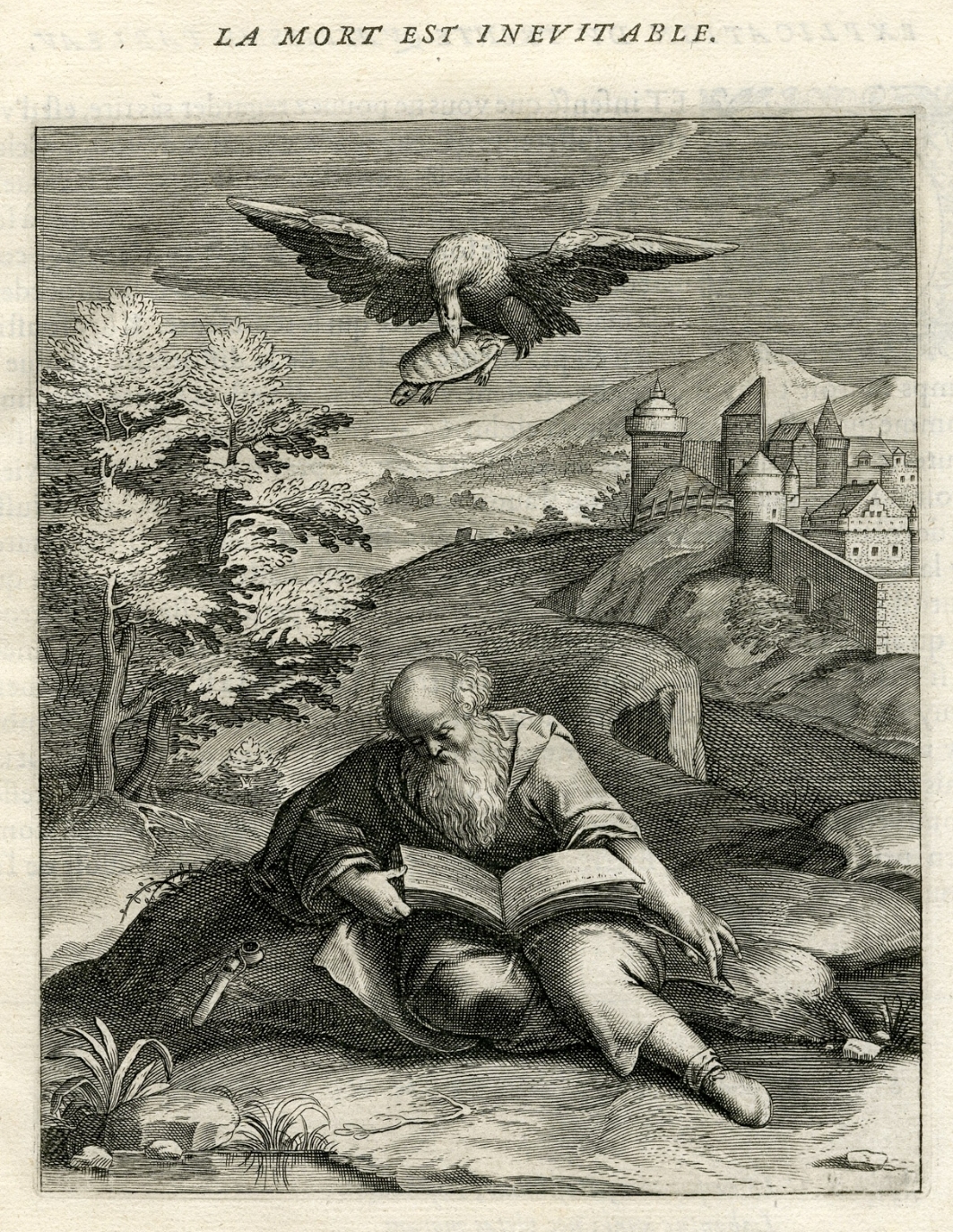
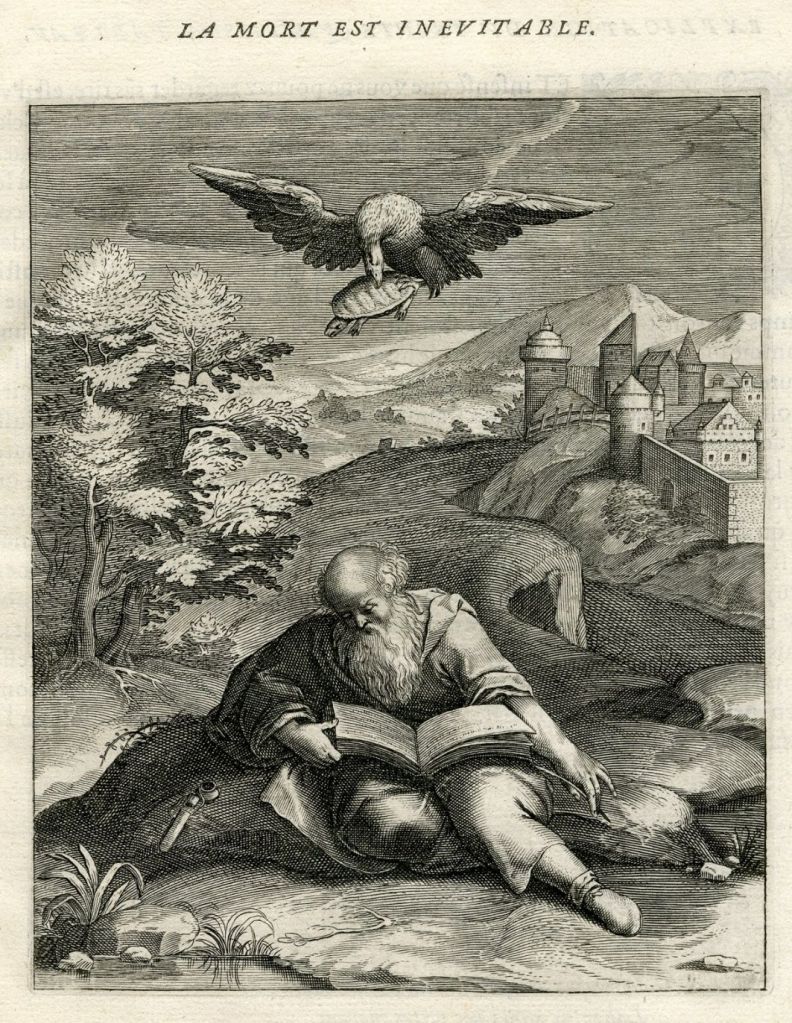
Whenever we students—or some hypochondriacal patient—asked about that unlike or irrelevant fear that lurked in the darkest corners of our minds, the doctor would reply: “Of course it is possible for a turtle to fall from the sky and land right on your head.” He was referring to the legendary death of Aeschylus, who suffered a head injury when an eagle mistook his head for a rock and dropped a turtle on it from high above to crack the shell. Legend also has it that Aeschylus had been warned that day of a prophecy predicting he would be killed by something falling on his head, so he had decided to spend the day outdoors. Bahah, I think the professor was calling us blockheads, but he was too polite and kind to say it outright.
The teacher smoked cigarettes and made no secret of it. But you know how students are—impertinent and concerned about their masters’ health. “Professor, aren’t you afraid that smoking might kill you?” To this, he replied that he would inevitably be claimed by the statistics—either among those who smoke and die from it, or those who smoke and die of something else. The teacher knew his statistics.
My father, during the course of his illness and as he neared the end of his life, once confessed to me: “You know, Lica, I’ve been thinking about this a lot lately—I never drank, never smoked, and never used drugs, yet I’m going to die anyway; do you think it would have been worth it to have done all those things?” I replied that, aside from a few eccentrics who experimented with LSD in the sixties and wrote books about the mind-expanding effects of psychedelia, I didn’t know about anyone else who had achieved immortality by those means. People simply use the resources available to them when they cannot exercise the self-determination they would like to have in their lives.
Too complicated, I don’t think Dad was convinced, but there was no time left. The professor died a young oldster, and so did Dad. Thirty-seven years together are painfully short when you have a wonderful father, and torturously long when you have terrible parents.
In any case, Rubem Alves had already warned us in his small yet great book, O Médico: “The idea that medicine is a battle against death is wrong. Medicine is a battle for the good life—of which death is a part.” To that my professor would likely have added: so try to struggle a bit less and enjoy it a bit more.
The professor passed away in his hometown, and I—traveling the world—did not realize it. He set no date or time for me to say goodbye. But, after all, “what is written on the heart needs no agenda, for we do not forget. What memory loves becomes eternal.”
Be eternal, Dr. Sylvio!


